Endings
Marvel gave Loki a perfect ending. Now they want it back.
Loki has been off screen for years and is still the character everyone argues about. That is not luck, it is architecture, and Doomsday is where it gets spent.
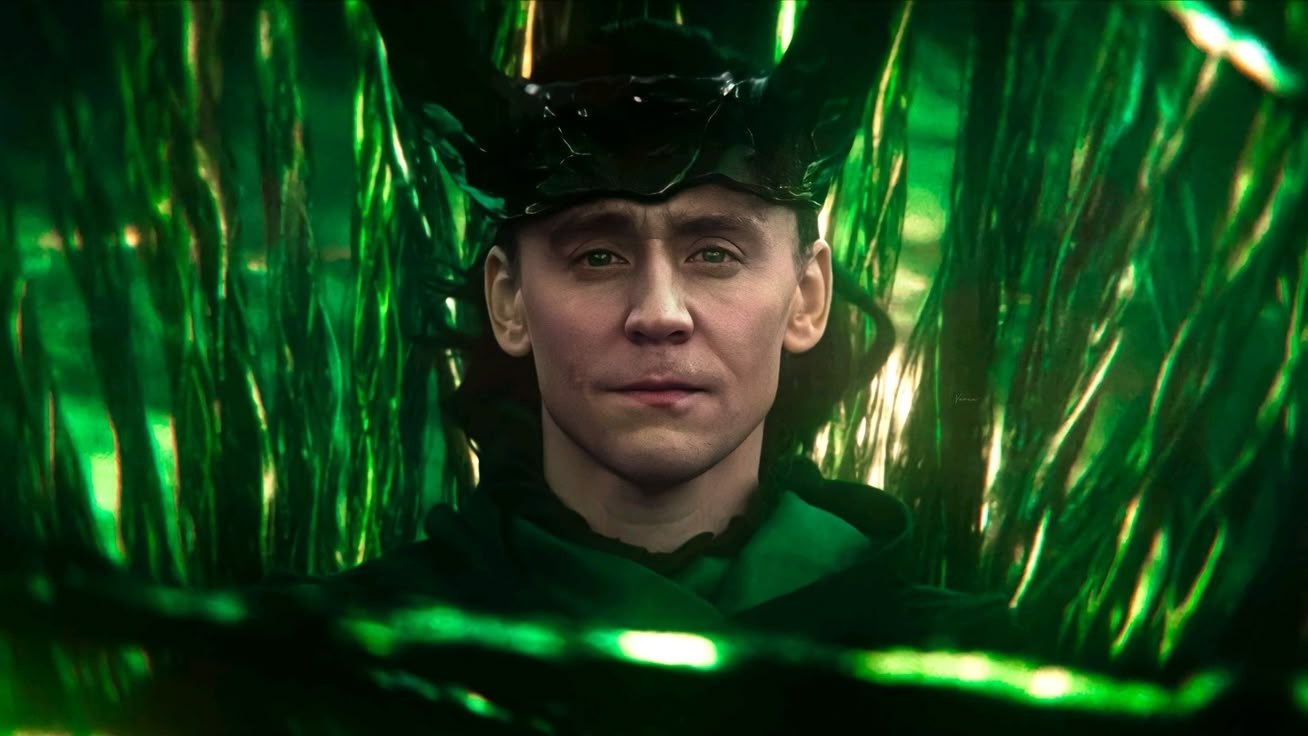
Loki / S2 E6 / Marvel Studios
Loki has not been on screen in years and he is still the character the whole internet is arguing about. Think about how strange that is.
Marvel is not feeding you new scenes. There is no weekly episode keeping the obsession warm. And still, every second thread about Doctor Doom ends with somebody typing but Loki is literally holding the multiverse together, he HAS to be in this.
Here is the uncomfortable part. They are right. And that is exactly the problem.
The finale did something Marvel almost never does
Season 2 ends with Loki walking to the End of Time, taking the seat He Who Remains left behind, and holding the branching timelines together with his own hands. The camera commits to it completely: a slow push-in, dead centre, symmetrical, until his face fills the frame. The idea underneath the spectacle is simple. He becomes the thing that keeps everyone else free, and gives up living inside the freedom he made.
The same episode ends someone else's story in exactly the opposite way, and I have written about that separately in why the camera lets Mobius stand still. Read together, they are one argument about what an ending is worth.
That is a real ending. There is no escape hatch in the scene. He is not packing a bag. He is not promising anything. The cost is the point.
Marvel does not do this. Marvel does mid-credits stings and he will return cards. The MCU has spent fifteen years teaching you to distrust a full stop, because the universe prefers commas. Somebody dies, then a post-credit scene. Somebody retires, then a cameo. Somebody sacrifices themselves, then a multiverse loophole.
Audiences have learned a defensive reading strategy out of this: never commit emotionally to finality, because the machine probably wants the character back. For one episode, Marvel looked willing to leave a character alone. The hero did the thing. The story charged the price. The credits rolled.
An ending that big is also a lever
Now look at what that finale technically accomplished.
It removed Loki from ordinary MCU storytelling and, in the same move, made him structurally relevant to almost all of it. He is not walking around in anybody else's film. He is tied to the machinery those films keep being about.
This is why load-bearing wall is a more useful phrase than king. A king can leave a room. A support beam cannot. You have been handed an image of a man physically holding the branches together, so the moment a future story threatens those branches, your brain asks where he is. It has to.
That makes him the perfect franchise asset: permanently important, permanently optional. Every multiverse story can gesture at him without undoing anything. Every trailer can leave him out while fans theorise. Every filmmaker can reach for him in an emergency, or not, and the original finale survives either way.
Why the theories are not stupid
Fans get mocked for connecting dots. This is not that.
There is a difference between inventing a theory and following a story to its obvious pressure point. If a character has been established as the keeper of the timelines, and the next story is about threats to those timelines, asking whether that character matters is not delusion. It is basic reading.
You do not need a leaked set photo. The finale itself generates the question.
The audience is doing the marketing
Here is the part worth sitting with.
I do not think anyone made that finale thinking great, we can farm this for six years. It is too emotionally specific for that. It feels made by people who wanted the sacrifice to mean something.
But a story inside a franchise stops belonging to its writers. It becomes a reusable object. Fans interpret it, marketers frame it, actors get asked about it, future writers inherit it. The emotion was real; the machine around it has other incentives.
And the machine cannot lose. If he appears, everyone who predicted it feels clever. If he does not, nothing was promised and the finale stands. If a film teases without showing, the argument continues. Marvel gets years of engagement for the price of one good episode, and the audience does the promotional labour for free.
We are unpaid continuity staff. We remember what they want us to remember. We rewatch a years-old finale because a new project made it relevant. And we do it because the ending was good.
Every explanation is a receipt
The reason I would rather he stayed on that throne is not that a return is impossible. Marvel can invent anything, that is the business. The problem is that every workaround changes what the original scene means.
Say he can simply walk away because of a rule we forgot. Fine. Then the choice was not permanent. It may still have been painful and heroic, but the finality was performance. The audience was told a sacrifice was absolute and then taught that absolutes get renegotiated when a crossover needs them.
Or say the film finds a technicality. Another variant. The throne is not quite a throne. Someone else can take over. All workable plot. All creating the same emotional problem: the film has to spend screen time explaining why what you watched was less irreversible than it looked.
That is expensive storytelling. Not expensive in VFX. Expensive in meaning. Every extra explanation is a receipt. It tells you the franchise had to reopen a door the character's own story had closed.
The real danger is not one retcon
The MCU already has a credibility problem around death. Viewers have learned a character can be dead, retired, trapped, erased or sacrificed and still be available.
Once you prove the most satisfying ending had a back door, people stop trusting doors at all. That is not abstract. It changes how a scene plays. A sacrifice lands differently when you believe the character is gone. A goodbye gets quieter when it feels like a goodbye rather than an appointment.
Loki temporarily restored that trust. Break it for a crossover and you do not only change Loki. You change how every ending after him is watched.
Consequence is not the same as a cameo
There is a version of this I would happily watch.
Not Loki stepping through a portal to applause. Loki's choice pressing on the plot while he stays exactly where he is. A film that treats the throne as a fact the story has to work around, rather than an inconvenience to write past. Characters constrained by a decision he made, in a place they cannot reach.
Mythology expands when a character is absent. A plot device has to be in the room to function. Loki's ending made him mythology. Dragging him into a crossover would demote him to a device, and the crossover would not even notice the trade.
What to watch for
- Whether any return explains the throne or steps around it. Explaining is expensive. Stepping around it tells you what the ending was worth.
- Whether the moment is given weight or given a cheer. A door opening to applause is a different scene from a door opening to consequence.
- Whether the film needs him, or needs the reaction to him. Not the same thing, and you can usually feel which one you are in.
- Whether the story seems embarrassed by the ending. That is the one I would really watch for. Embarrassment shows up as speed.
Leave the green light on
The most satisfying answer to all of this might be no answer.
Loki sitting alone at the end of time, holding something enormous, while films happen elsewhere and never quite reach him. Present in the architecture, absent from the frame. Still the most interesting thing in the universe he made possible.
I have already seen the version where he does not come back. It was the best thing Marvel has made.
Come argue with me about it.